
AI Automation Ideas for Local Businesses That Actually Save Time

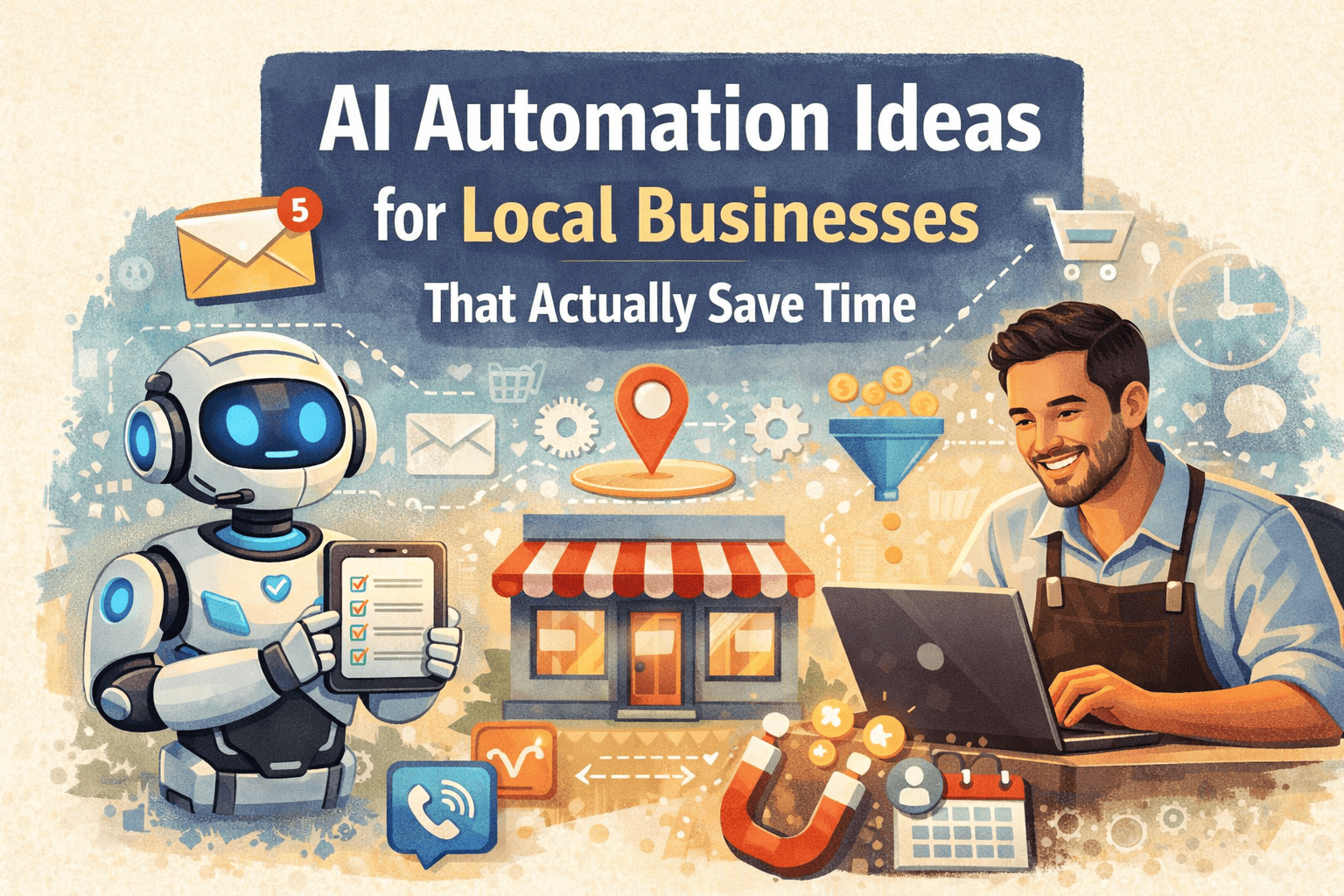
If you run a local business, you probably do not need "the future of AI."
You need fewer missed calls, faster replies, and less time wasted on repetitive admin.
That is why local businesses are one of the best real-world use cases for AI right now. Not because it sounds impressive, but because there is so much boring work that still gets done by hand every day.
Think about how many small businesses still do this stuff manually:
A customer messages on Facebook asking for a quote. Someone replies three hours later.
A missed call comes in after opening hours. Nobody follows up.
A website form gets submitted. The lead sits in an inbox until the next morning.
That is where AI becomes useful. Not in some flashy "replace your whole company" way. Just in a simple, practical way that saves time and stops leads slipping through the cracks.
Here are a few AI automation ideas that actually make sense for local businesses.
1. Instant reply for website leads
This is the easiest win.
Someone fills out your contact form, and instead of getting silence, they get an instant reply that feels human, confirms the request, and tells them what happens next.
That one small change already makes your business feel more professional.
A simple setup could do three things the second a form is submitted:
Send a confirmation email to the customer.
Add the lead to a spreadsheet or CRM.
Send the business owner a short summary of the enquiry.
That does not sound revolutionary, but it fixes one of the biggest problems small businesses have: slow follow-up.
2. Missed call follow-up
A lot of local businesses lose work because they cannot answer every call.
A missed call at the wrong time can easily become a customer going to the next company on Google.
A simple AI follow-up system can send a message after a missed call saying something like:
"Hi, thanks for calling. We missed you. If you want, reply here with what you need and we will get back to you shortly."
That alone can save leads that would have disappeared.
If you want to go a step further, you can have the message routed into a simple workflow that categorises the enquiry by service, urgency, or postcode.
3. Review request automation
Most businesses know reviews matter. Most businesses are also terrible at asking for them consistently.
That is exactly the kind of thing automation is good at.
After a job is marked complete, you can trigger a polite message asking for a review. Not instantly, not aggressively, just at the right moment while the customer still remembers the service.
The reason this matters is simple: businesses usually do not need more "marketing ideas." They need systems that happen without someone remembering to do them.
4. Quote request triage
This one is especially useful for service businesses.
Instead of every new enquiry landing in the same inbox with no structure, AI can read the message and help sort it. Is it a high-intent quote request? A general question? A customer support issue? A job application?
Once you classify enquiries automatically, you can prioritise the ones that matter most.
That does not replace the owner. It just helps them stop drowning in the inbox.
5. Basic FAQ assistant
Not every business needs a chatbot. Most do not.
But many businesses do have the same five questions asked over and over again:
What are your opening hours?
Do you cover my area?
How much does it cost?
How quickly can you come out?
Do I need to book in advance?
If those questions are eating up your time, a simple assistant on the website or WhatsApp can help answer the easy stuff before a human needs to step in.
The mistake people make is trying to build something huge. The better move is to keep it narrow and useful.
Where most businesses get this wrong
They try to automate everything at once.
That is usually where it falls apart.
The smarter approach is to pick one annoying task that happens every day and fix that first. Usually it is either lead follow-up, missed calls, review requests, or basic customer questions.
Once one workflow is working, then you build the next one.
That is how AI becomes useful in a real business. Not as a gimmick. As part of how the business actually runs.
Final thought
If you are a local business owner, the biggest opportunity with AI is not creating fancy content or chasing trends. It is saving time, replying faster, and making sure interested customers do not go cold.
And if you are someone looking to make money with AI, this is one of the clearest opportunities out there. Small businesses do not need a lecture on artificial intelligence. They need practical systems that fix obvious problems.
That is where the value is.