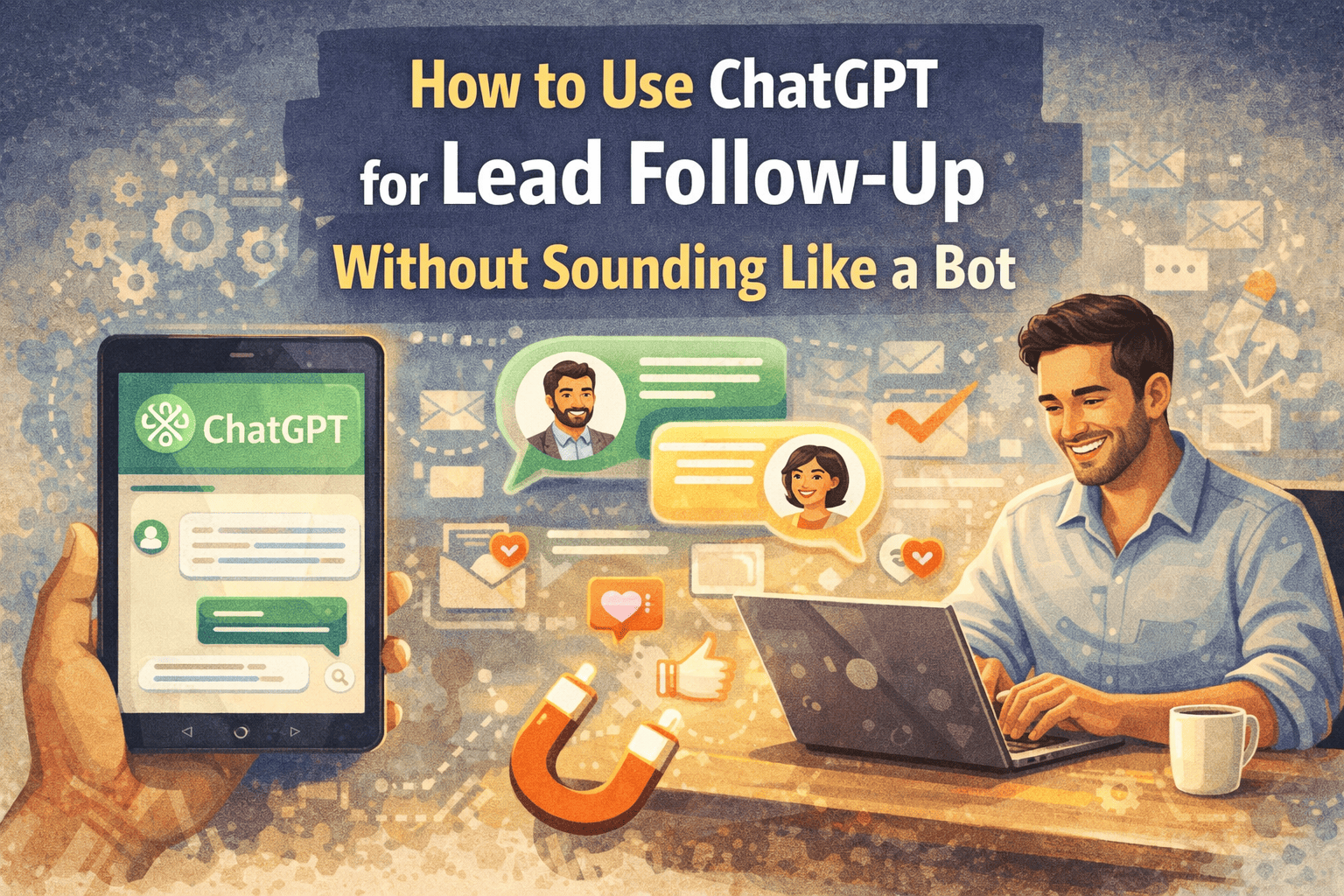
How to Use ChatGPT for Lead Follow-Up Without Sounding Like a Bot

A lot of businesses are using AI for lead follow-up now.
You can usually tell within about five seconds.
The message arrives instantly, sounds weirdly polished, says too much, and somehow feels both over-friendly and completely lifeless at the same time.
That is the problem.
Using ChatGPT for lead follow-up is not a bad idea. In fact, it can be a really smart one. But most people use it in the worst possible way: they ask it to "write a sales message" and then paste whatever comes out.
That is how you end up sounding like a bot.
If you want it to work, the goal is not to let AI talk for you. The goal is to use AI to help you reply faster while still sounding like a normal person.
What a good follow-up actually does
A good follow-up message is usually simple.
It reminds the person who you are.
It shows you actually understood what they asked for.
It gives them one clear next step.
That is it.
Most bad follow-up messages fail because they try to do too much. They become mini sales pages instead of replies.
Where ChatGPT is genuinely useful
The best use of ChatGPT here is not to generate the final message from nothing. It is to help with the parts that slow people down.
For example:
Turning rough notes into a cleaner reply.
Giving you three versions of the same message in different tones.
Shortening an over-explained draft.
Making a follow-up sound more natural and less stiff.
That is a much better role for it.
Start with your own rough notes
Let us say someone fills out your form asking about website design for their small business.
A bad way to use ChatGPT would be this:
"Write me a lead follow-up for a website enquiry."
A better way is this:
"Rewrite this so it sounds friendly, short, and professional. Do not sound pushy. Keep it under 120 words."
Then paste your rough draft:
"Hi, thanks for your enquiry. We do website design and can help. Can you send more details about pages and features and budget and timeline and we can quote."
Now the tool has something real to work with. It is improving your message, not inventing a personality from scratch.
Keep the tone plain
One of the biggest giveaways of AI-written follow-up is overdone language.
Things like:
"I would be absolutely delighted to explore this exciting opportunity with you."
Nobody talks like that.
The safest style is plain, calm, and direct. Something like:
"Hi James, thanks for reaching out. I had a look at your message and I can definitely help with that. If you want, send over a few more details on what you need and your rough timeline, and I will point you in the right direction."
That sounds human because it is close to how a real person would write.
Use templates, but do not make them obvious
Templates are fine. Most businesses use them in some form.
The mistake is using the exact same generic block every time.
A better approach is to build a few simple message types:
First reply to a new lead.
Follow-up after no reply.
Reply after a discovery call.
Quote follow-up.
"Still interested?" check-in after a week.
Then let ChatGPT help tailor the wording based on the situation.
That way you are not staring at a blank screen every time, but your messages still feel specific.
The easiest workflow
If I wanted a lightweight setup, I would do this:
A lead comes in through a form.
The enquiry goes into a sheet or CRM.
A draft reply is generated based on the service type.
You check it, tweak it, and send.
That is the sweet spot.
You save time, but you still keep control. Which matters, because bad follow-up costs money.
Do not automate the wrong stage
AI is helpful for the early parts of follow-up. Quick replies, summaries, reminders, and simple check-ins.
Once a lead becomes high-value or more serious, you should step in personally.
That is where context, judgement, and tone matter more than speed.
The businesses that get this right use AI to handle the first layer, not the whole relationship.
Final thought
ChatGPT can absolutely help with lead follow-up. But only if you use it like an assistant, not like a replacement salesperson.
The goal is simple: reply faster, sound better, and make it easier for interested people to take the next step.
If your follow-up still sounds like something a real person would send, you are probably using it the right way.
 Chris
Chris
 Chris
Chris
 Chris
Chris